Research Article
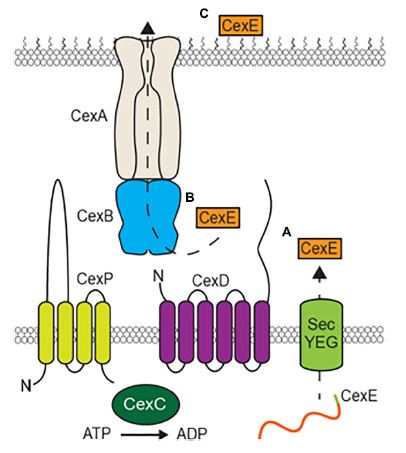
CexE is a 12 kDa protein that was originally reported to be present in just three strains of enterotoxigenic Escherichia coli (ETEC); a frequent cause of diarrheal illnesses worldwide. However, an examination of sequenced genomes has revealed that CexE is actually present in a majority of ETEC strains. In addition, homologs of CexE are present in enteroaggregative E. coli (EAEC), Yersinia enterocolitica, Providencia alcalifaciens, and Citrobacter rodentium. Although it has been hypothesized that CexE and its homologs are virulence factors, this has yet to be tested.
Review Article
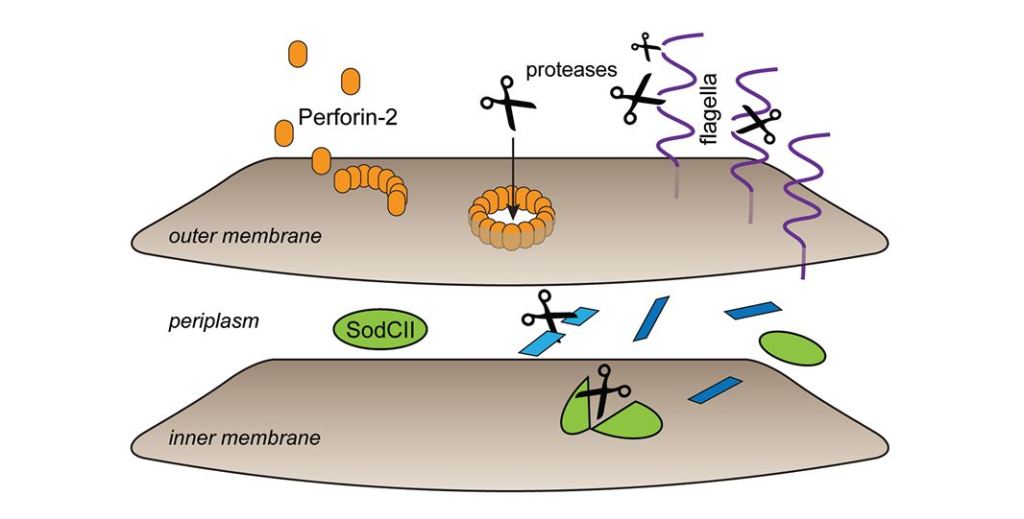
The membrane attack complex (MAC) of the complement system and Perforin-1 are well characterized innate immune effectors. MAC is composed of C9 and other complement proteins that target the envelope of gram-negative bacteria. Perforin-1 is deployed when killer lymphocytes degranulate to destroy virally infected or cancerous cells. These molecules polymerize with MAC-perforin/cholesterol-dependent cytolysin (MACPF/ CDC) domains of each monomer deploying amphipathic b-strands to form pores through target lipid bilayers. In this review we discuss one of the most recently discovered members of this family; Perforin-2, the product of the Mpeg1 gene. Since their initial description more than 100 years ago, innumerable studies have made macrophages and other phagocytes some of the best understood cells of the immune system.
 Zachary Rivas